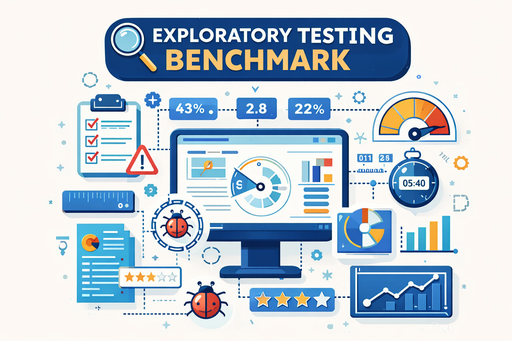
Autonomous Testing Agent Benchmark in works
AutoExplore is building a benchmark for agentic exploratory testing. We want the community’s input on the metrics that should define exploration quality, defect detection, and efficiency.
Read moreInsights, updates, and technical deep-dives from the AutoExplore team.
AutoExplore is building a benchmark for agentic exploratory testing. We want the community’s input on the metrics that should define exploration quality, defect detection, and efficiency.
Read more
AutoExplore is launching with always on autonomous testing that explores your web app like a real user, then reports errors, security, performance, and accessibility findings with steps, screenshots, and timelines.
Read more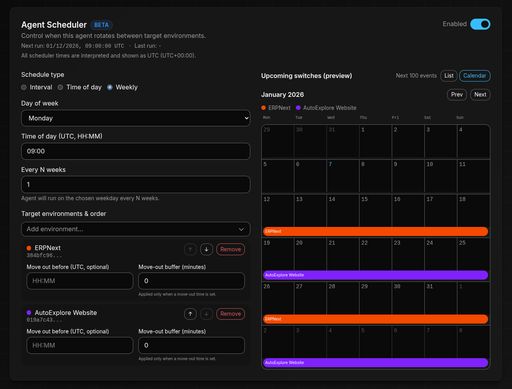
Share a single AutoExplore Agent between multiple applications by scheduling it to rotate between target environments, so you can reduce testing cost without losing coverage and make testing smaller applications more affordable.
Read more
AutoExplore’s latest update introduces an intelligent security scanner that enhances web application testing by combining real-browser exploration with automated vulnerability analysis. By routing traffic through ZAP Proxy, AutoExplore can now identify hidden security misconfigurations such as missing headers, insecure cookies, and weak site isolation issues. Each finding is traceable, risk-rated, and reproducible through AutoExplore’s timeline view, helping teams prioritize fixes efficiently. The scanner performs safe, non-destructive checks, extending AutoExplore’s mission to deliver autonomous, end-to-end software quality testing.
Read more
European Accessibility Act (EU Directive 2019/882) came into effect at June 28, 2025. This legislation defines minimum accessibility standards for a wide range of products and services. In this post, we will look at available tools for accessibility testing and how to integrate them into your development process and how AutoExplore can play a role in this process.
Read more![null, undefined, NaN, [object Object]](/img/56B-AxAPV6-512.png)
One common mistake in Web development is to use the value of a variable or property that is not in the expected state. JavaScript has two bottom values null and undefined. Due to the widespread use of JavaScript, it is common to see these values rendered in the UI. Most of the time, these values are not intended for the end user and can be confusing. The AutoExplore agent is now able to detect these values and highlight them in the reports.
Read more
Since AutoExplore's recent update, it is possible to run multiple agents in parallel against multiple environments. This allows testing multiple versions of the application under test, for example, production and staging environments. It can also be used to speed up the testing process by running multiple agents against the same environment. Watch the video to learn more...
Read more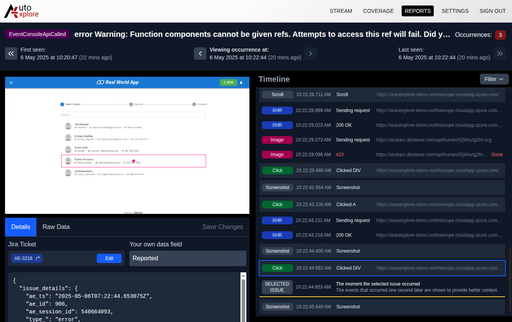
Autonomous testing without specified test cases creates a unique challenge for issue reporting. How to present the information about the found issues in a way that it is easy to understand and reproduce without overloading the user with too much information?
Read more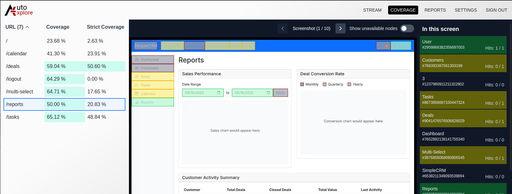
Autonomous testing with AI agents requires new ways to measure test coverage, as traditional metrics like code or requirement coverage don’t apply. AutoExplore addresses this by introducing UI coverage...
Read more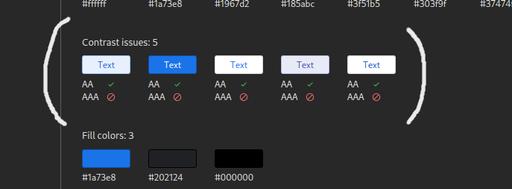
Have you been using GEN-AI to check contrast values from images of your web application? Well, there is a much more reliable way, and p.s. you don't have to use a kilowatt of electricity for it.
Read more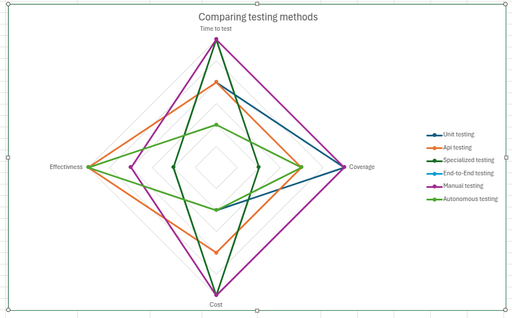
Typical modern software development lifecycle testing includes large amounts of scripted testing and some manual testing. Due to recent advancements in AI and machine learning, autonomous testing is becoming more popular. In this article, we will compare autonomous testing to...
Read moreAgile development has become the standard for software teams aiming to deliver value quickly and to adapt to changing requirements. However, as the market competition is getting tougher, budgets are cut and release cycles shortened, quality assurance methods often struggle to keep up. In this article, we will explore how autonomous testing can help agile teams to meet their goals and maintain high quality standards.
Read more